

Across the US, Wisconsin and the Chippewa Valley, manufacturers are facing a familiar but intensifying challenge: how to build a skilled, efficient, and adaptable workforce in an era defined by labor shortages, rapid technological change, and global competition. While many companies chase the newest tools or automation trends, CEDC and UW Stout Manufacturing Out Reach Center (MOC) are helping the successful firms rediscover a foundational system that has quietly powered manufacturing excellence for more than 80 years—Training Within Industry (TWI).
In the Chippewa Valley- thanks to the UW Stout MOC, TWI is experiencing a renaissance, especially as artificial intelligence (AI) transforms how companies train workers, improve processes, and manage operations. Together, AI and TWI form a modern workforce strategy that strengthens our local manufacturers, stabilizes our economy, and fuels long‑term growth.
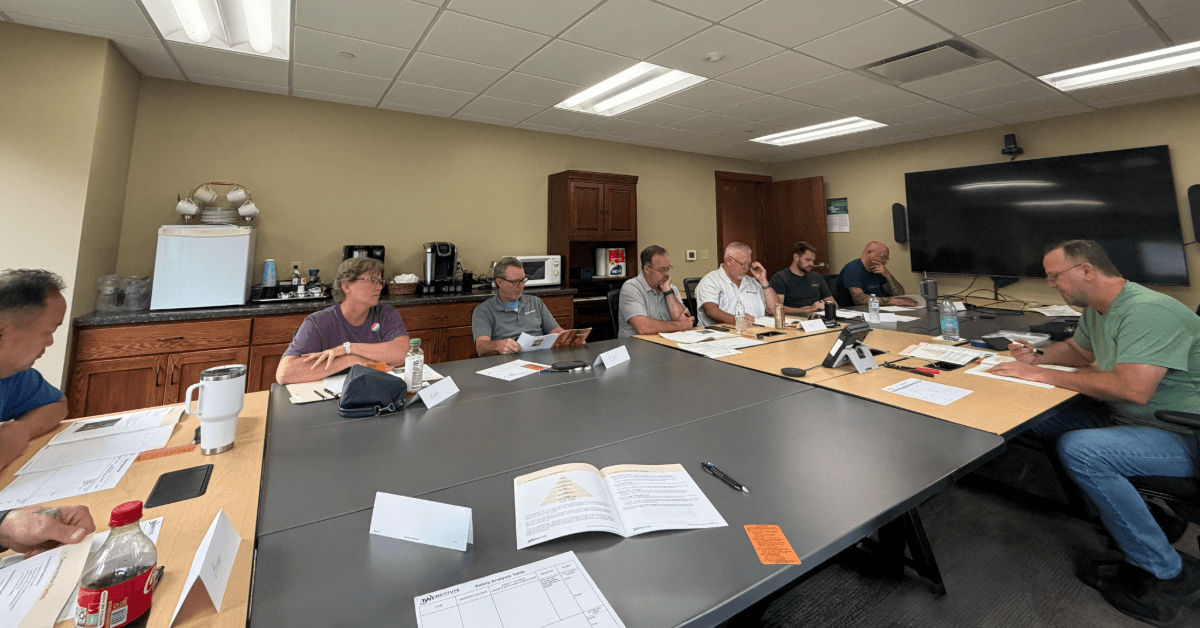
CEDC knows that this isn’t just a plant‑floor improvement tactic. It’s an economic development strategy. And has partnered with UW Stout MOC by hosting more TWI training for local manufacturing companies.
Training Within Industry: The Forgotten Backbone of Manufacturing Excellence
Originally developed during World War II, TWI helped American factories rapidly train millions of workers with little or no industrial experience. Its structured methods—Job Instruction, Job Methods, and Job Relations-became the foundation for standardized work, lean manufacturing, and eventually the Toyota Production System. Today-TWI still matters because the challenges it was designed to solve are back:
- High turnover
- Limited skilled labor
- Pressure for consistent quality
- Need for rapid onboarding
- Demand for flexible, cross‑trained teams
TWI provides a repeatable, proven framework for developing people quickly and effectively.
The Three Core Programs of TWI
- Job Instruction (JI): Standardized training that teaches workers to perform jobs correctly, safely, and consistently.
- Job Methods (JM): A structured approach to improving processes by eliminating waste and increasing efficiency.
- Job Relations (JR): Supervisory skills that build trust, prevent problems, and strengthen team performance.
These programs create a workforce that is capable, confident, and aligned—exactly what modern manufacturers need.
AI Meets TWI: A Digital Transformation Built on Human-Centered Foundations
While TWI provides the structure, AI provides the scale. Manufacturers are increasingly using AI-powered platforms to digitize and enhance TWI principles:
- Digital Work Instructions aligned with Job Instruction
- Real-time feedback loops that mirror Job Methods
- Mobile coaching tools that reinforce Job Relations
- Predictive analytics that identify training gaps or process bottlenecks
- Automated documentation that ensures consistency across shifts and sites
AI doesn’t replace TWI—it amplifies it. It makes standardized work easier to follow, improvements easier to capture, and leadership easier to practice. This combination is especially powerful for our small and mid-sized manufacturers who need to do more with fewer people.
Why AI + TWI Is an Economic Development Strategy
Economic development isn’t just about attracting new companies—it’s about strengthening the ones already here. When local manufacturers thrive, the entire region benefits.
- Boosts Competitiveness
Manufacturers that train effectively and operate efficiently win more contracts, expand production, and invest locally. TWI ensures consistent quality and faster onboarding. AI ensures scalability and continuous improvement. Together, they help local plants outperform competitors—anchoring stable, high-paying jobs in the region.
- Overcomes Labor Shortages
Many communities—including Chippewa—face tight labor markets. TWI was built for this exact challenge. Its standardized training methods allow companies to hire workers with little prior experience and upskill them quickly. AI accelerates this by providing digital guidance, automated coaching, and adaptive learning tools. This expands the talent pipeline and reduces reliance on scarce skilled labor.
- Creates Resilient Local Supply Chains
Strong manufacturers support strong communities. When our local plants operate efficiently, they buy more from nearby suppliers, invest in local service providers, and create a ripple effect of economic activity. AI-enabled TWI strengthens frontline operations, reduces downtime, and improves reliability-making local companies better partners in Wisconsin supply networks. This builds economic resilience that protects communities during downturns.
The Human Infrastructure Behind Modern Manufacturing
AI often gets the spotlight, but technology alone doesn’t transform a factory. People do. TWI provides the human infrastructure—standardized work, clear communication, strong supervision-that allows advanced technologies to succeed. Without it, digital tools become inconsistent, underused, or misapplied. With TWI, AI becomes a force multiplier.
Why Chippewa Should Care
For economic development organizations like CEDC, promoting AI + TWI adoption is a strategic investment in regional prosperity. It helps local manufacturers:
- Train faster
- Retain workers
- Improve quality
- Reduce waste
- Strengthen leadership
- Scale innovation
- Compete globally
And when our manufacturers thrive, our communities thrive.
The Future of Workforce Development Is Hybrid: Human + Digital
Manufacturing is entering a new era—one where classic training systems and cutting-edge technology work hand in hand. TWI provides the structure. AI provides the acceleration. Together, they create a workforce that is skilled, adaptable, and ready for the future. For Chippewa County, this is more than a plant-floor improvement. It’s a blueprint for long-term economic strength.