
The Forecast Lunch, part of CEDC’s Business Retention and Expansion (BEAR) program and hosted by CEDC with generous sponsorship from Frandsen Bank & Trust, brought together business owners, entrepreneurs, lenders, educators, area manufacturers, and public-sector partners. The shared purpose was clear: to better understand the forces influencing our local economy so we can make smarter, faster decisions together.
More than 80 engaged local leaders gathered over tacos, and the room quickly made it clear this was more than just another luncheon. Conversations moved from “what’s happening?” to “how is the local economy doing?” as introductions were made, familiar faces reconnected, and new relationships were formed among people who share a common interest in the Chippewa Valley’s future. The energy in the room reinforced a central theme: our region isn’t standing on the sidelines of economic change—we are actively shaping what comes next.
Featured economist Dr. Gary A. Wagner connected national and Wisconsin economic trends directly to what employers are experiencing on the ground in the Chippewa Valley. Rather than simply presenting data, he provided context—highlighting where growth may be headed, what interest rates could mean for investment decisions, and how our region fits within the broader Upper Midwest economy. Drawing on comparisons across Metropolitan Statistical Areas (MSAs)—geographic regions that link a core city with surrounding communities through shared economic and commuting patterns—he noted that Chippewa Valley employment has recovered faster than both Wisconsin and the U.S. overall since the pandemic. That performance places our region in the top half of metro areas nationally for employment recovery over the past several years, reinforcing what many attendees already experience: the Chippewa Valley is both competitive and resilient, with a strong foundation for continued growth.
He also highlighted the sectors driving that strength. Those data points closely aligned with stories shared in the room—employers expanding services, growing operations, or working to meet strong demand in health care, care-related fields, construction, and key segments of the supply chain. At the same time, he noted that the Chippewa Valley’s share of Wisconsin’s economic output places it alongside other successful regional centers, underscoring its meaningful contribution to statewide growth.
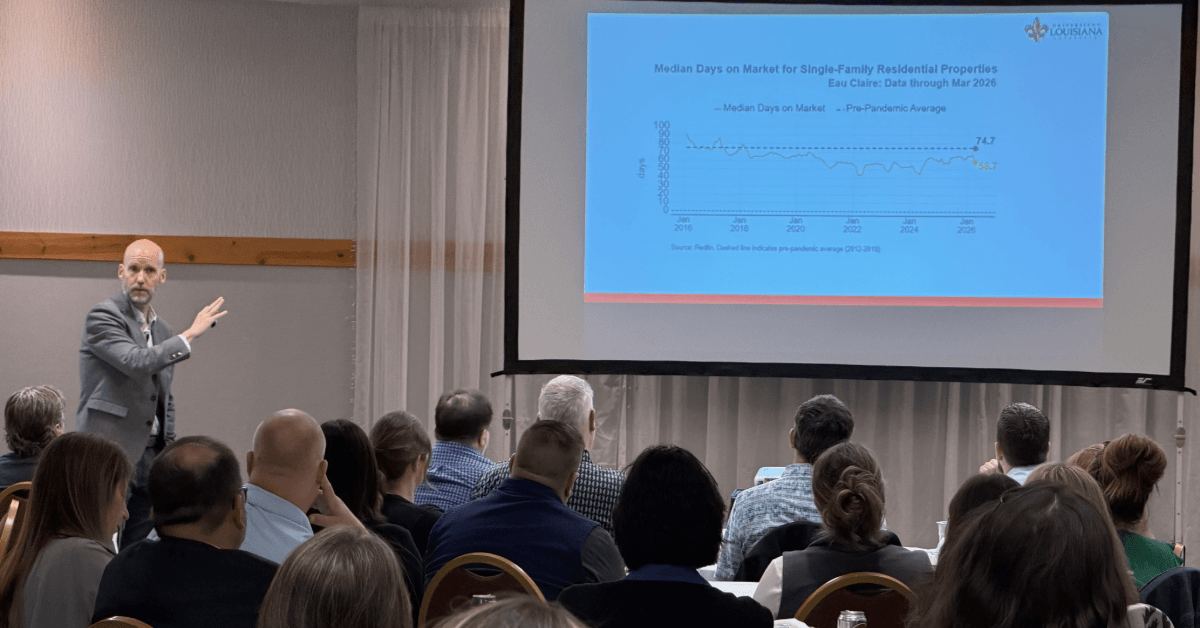
Housing trends helped round out the local picture. Home price growth in the Chippewa Valley has been running above long-term historical norms, while residential inventory remains below pre-pandemic levels. Homes continue to sell more quickly than they did in the 2010s. This combination—rising prices, tight supply, and shorter days on market—highlighted a key theme for employers and residents alike: housing availability and affordability are directly tied to workforce attraction and retention. These insights helped ground the conversation around where new housing, infrastructure, and community investment will be most needed to support continued regional growth.
Workforce remained a central theme throughout the discussion. Dr. Wagner shared current data on labor force participation, demographic shifts, and industry trends that sparked thoughtful questions and meaningful dialogue among attendees.
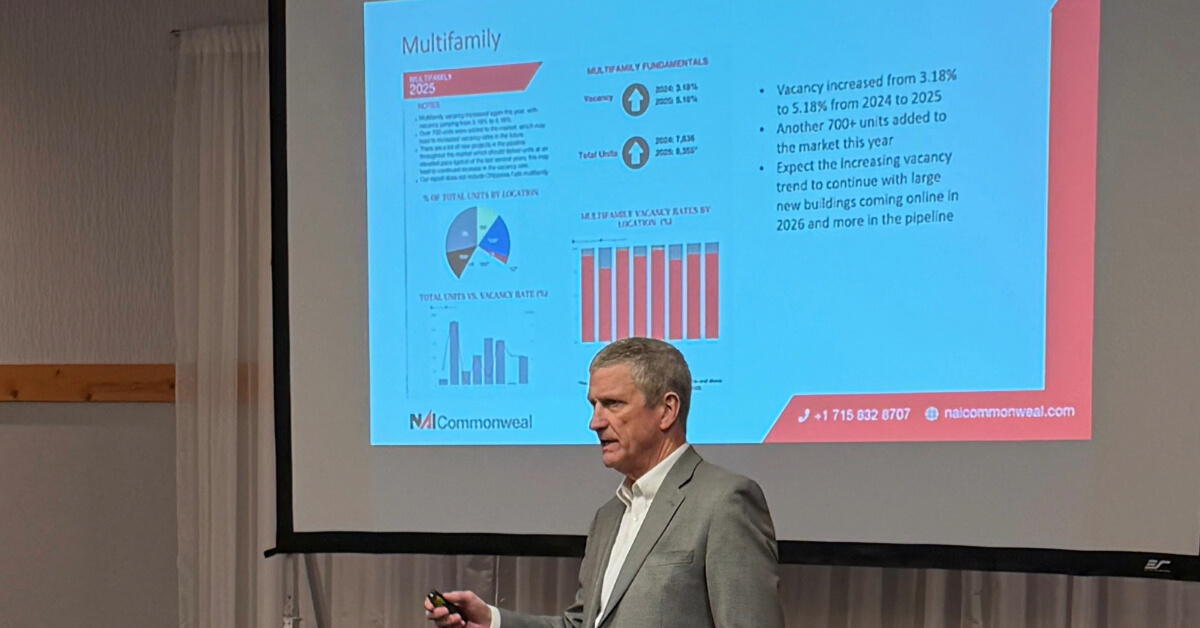
To close the program, Stuart Schaefer, President and Principal of NAI CommonWeal, a commercial real estate firm based in Eau Claire, Wisconsin, provided a market update on the Eau Claire commercial real estate landscape. He highlighted vacancy rates across multifamily, office, retail, and industrial sectors, as well as the report’s breakdown of seven submarkets, each with its own vacancy metrics. Attendees engaged with the findings, asked thoughtful questions, and shared local experiences that reinforced the report’s insights. Shafer, along with CEDC leadership, also discussed practical strategies to help existing employers grow and remain competitive.
One takeaway rose to the surface: continued support for CEDC’s economic development programs like BEAR is essential—starting with investing in the businesses already here, helping them expand, adapt, and continue contributing to the region’s long-term stability and growth.
Events like The Forecast Lunch continue to shape how economic development happens in the Chippewa Valley. They create space for meaningful connection—where business leaders, entrepreneurs, financial institutions, and public partners can engage with shared data and move forward with a common understanding. With strong participation and active discussion, the event served not just as a presentation, but as a working session focused on the region’s future.
CEDC remains committed to convening, connecting, and catalyzing these conversations. By combining data-driven insights with open dialogue, The Forecast Lunch helped local leaders test assumptions and strengthen shared understanding. As the Chippewa Valley continues to grow, this combination of strong fundamentals, local data, and collaborative problem-solving will remain one of our greatest strengths.