
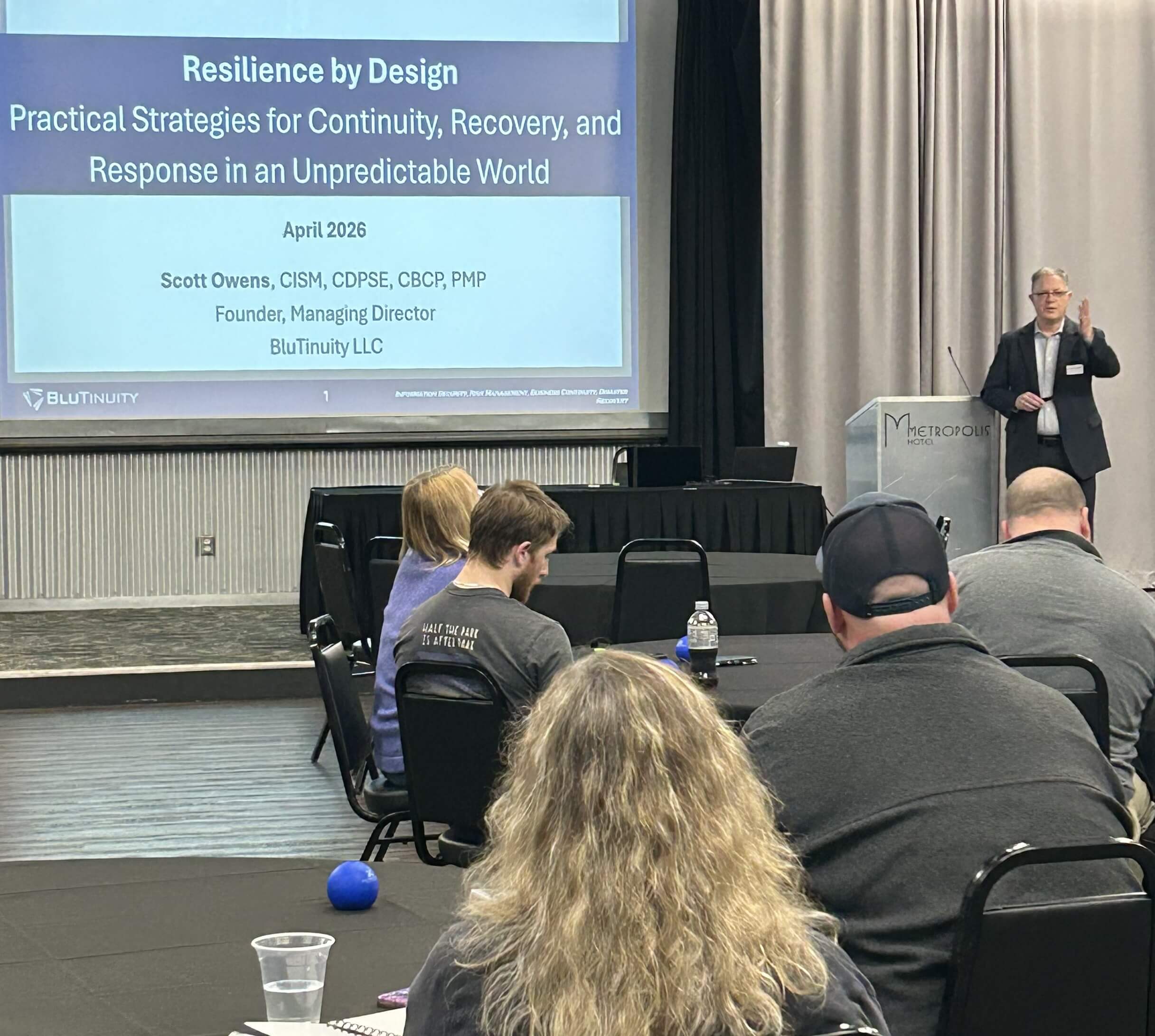
Conversations around disaster are never easy. Whether it is a cyberattack, natural disaster, or unexpected operational failure, the topic forces our local business leaders to confront risk, uncertainty, and worst-case scenarios. Yet CEDC knows those are exactly the conversations that must happen before a crisis or disaster ever occurs. That’s why CEDC partnered with the Dirks Group to help over twenty local business leaders gather for an executive-level seminar on the topic. The goal was simple and essential: help our local employers keep their businesses running and protect jobs when disruption strikes.
This work is especially important right now. Through ongoing BEAR (business expansion and retention) visits, CEDC continues to hear a consistent theme across industries: many local businesses are not adequately prepared for a major disruption. Some lack clear internal roles during a crisis. Others have not identified which systems must come back online first. Increasingly, our local business leaders are also navigating rising expectations around cybersecurity, compliance, and data protection. The seminar was designed to meet that reality head-on. Rather than focusing on theory, the session walked through practical, real-world steps leaders can take immediately. Attendees worked through how to define responsibilities during an emergency, prioritize critical operations, and build continuity plans that are both realistic and actionable. The discussion was grounded in experience, not hypotheticals.
Participants explored how leadership decisions and communication protocols directly impact recovery speed and business stability. The program also emphasized that effective crisis management depends on three pillars:
-
Preparedness – Establishing a crisis leadership team, defining decision-making authority, and mapping essential partners before an event occurs.
-
Response – Maintaining clear, consistent communication internally and externally, including with employees, customers, and local stakeholders.
-
Recovery – Focusing on restoring critical functions, supporting workforce stability, and coordinating with partners to expedite reopening.
The teachings underlined that strong leadership during crisis situations builds confidence both within an organization and across the broader community. Proactive planning helps ensure resources—financial, human, and technological—can be redirected quickly toward the greatest needs.
The Dirks Group played a central role, with Chief Revenue Officer Shawn Massey helping frame why disaster recovery and business continuity can no longer be treated as future priorities. As a long-time investor and collaborator with CEDC, their team continues to support regional employers not just through technology expertise, but through a shared commitment to economic resilience.
For CEDC, this effort directly reflects our mission. Supporting business growth is only part of the equation. Ensuring businesses can endure, adapt, and recover is just as critical to the long-term strength of the Chippewa Valley economy. When employers are prepared, jobs are protected, supply chains remain stable, and our communities are better positioned to weather challenges.
This seminar is one step in a broader, ongoing effort. Preparing today ensures the Chippewa Valley remains strong tomorrow. CEDC will continue creating opportunities for businesses to engage in these conversations, access resources, and strengthen their preparedness planning. For those looking to take the next step, additional guidance—contact The Dirks Group
If you are interested in future sessions or want to explore how your business can strengthen its disaster readiness, connect with the CEDC team.