
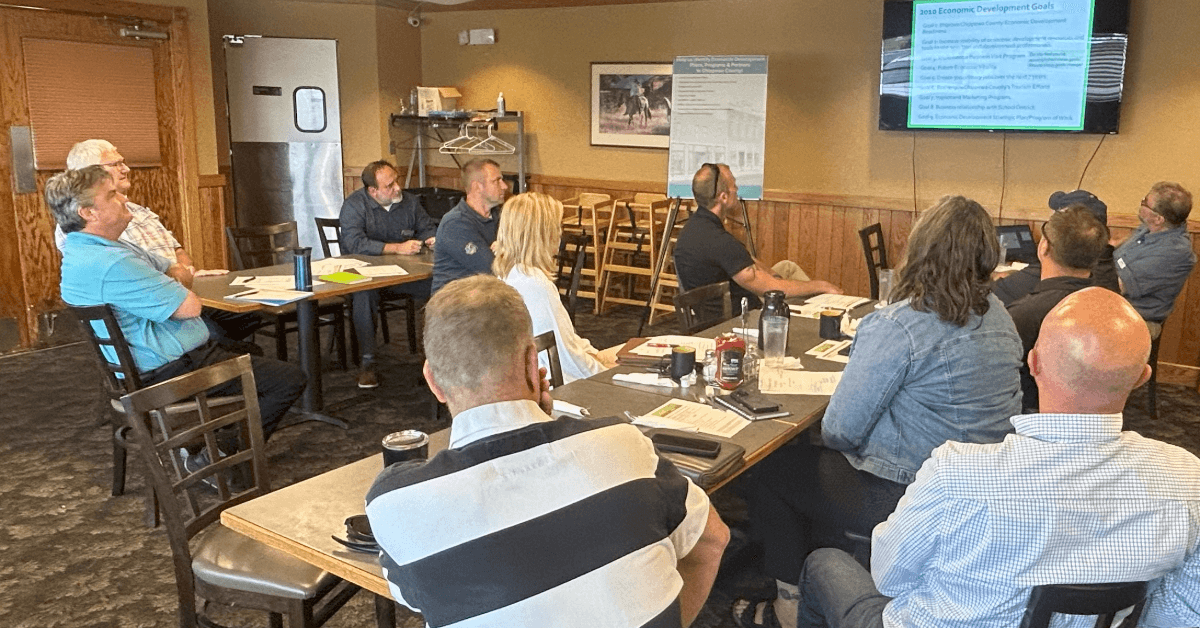
CEDC recently brought together business leaders from across the county in Cadott for a collaborative session aimed at gathering firsthand insights from those directly involved in the local economy. Engaging local businesses in updating the county’s comprehensive plan is crucial, as it ensures that strategies guiding land use, infrastructure, and economic growth align with the realities and aspirations of the community. This meeting marked an important step in shaping the plan, a long-term blueprint that will guide development, investment, and infrastructure decisions for years to come.
During the session, CEDC highlighted several key strategies designed to address challenges facing Chippewa County. These included supporting workforce development initiatives to attract and retain skilled talent, expanding broadband access to ensure businesses and residents can compete in a digital economy, and promoting infrastructure improvements that enhance connectivity and safety. The need for the next industrial park was emphasized to provide space for growing businesses and attract new industries, while programs to help entrepreneurs and business start-ups were discussed as critical ways to foster local innovation and economic diversification. Additionally, CEDC stressed the importance of securing more funding for economic development activities to expand resources for business support, infrastructure projects, and strategic initiatives that drive long-term growth. Strengthening partnerships between public and private sectors was also highlighted as a way to ensure coordinated, effective economic development efforts.
The economic development component of the county’s comprehensive plan plays a central role in driving job creation, supporting business retention, expanding the tax base, and fostering overall community prosperity. By incorporating direct input from the business community and integrating these strategies, county leaders can strengthen the region’s competitiveness and adaptability in a constantly evolving economic landscape. This collaboration ultimately benefits residents through sustainable employment opportunities, enhanced services, and a balanced tax structure.