
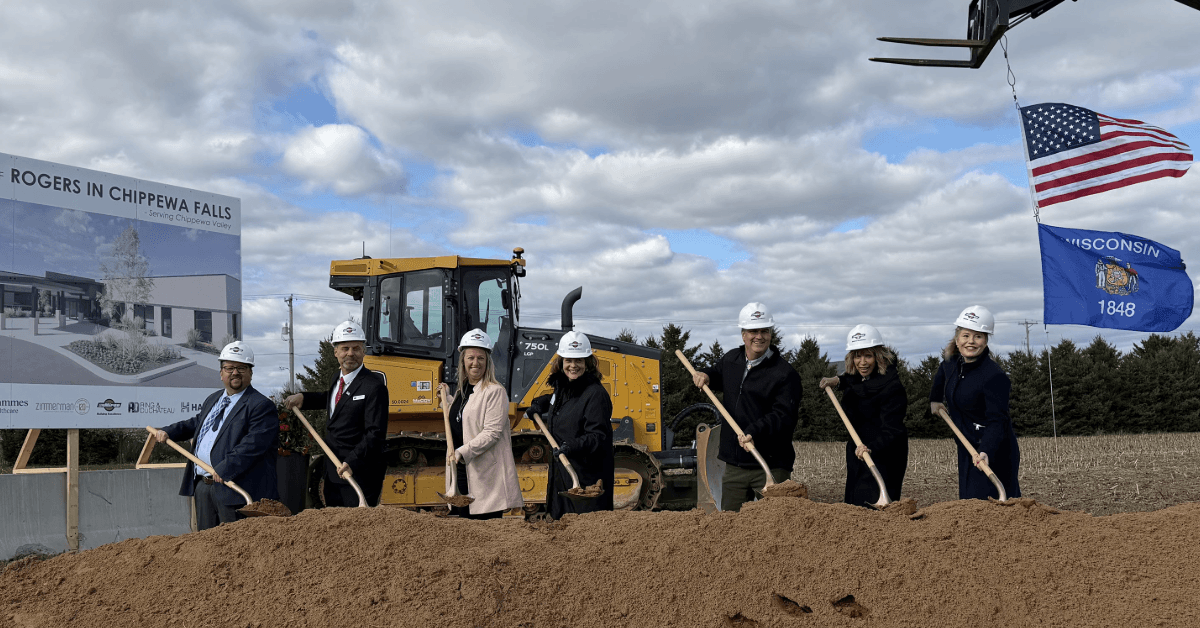
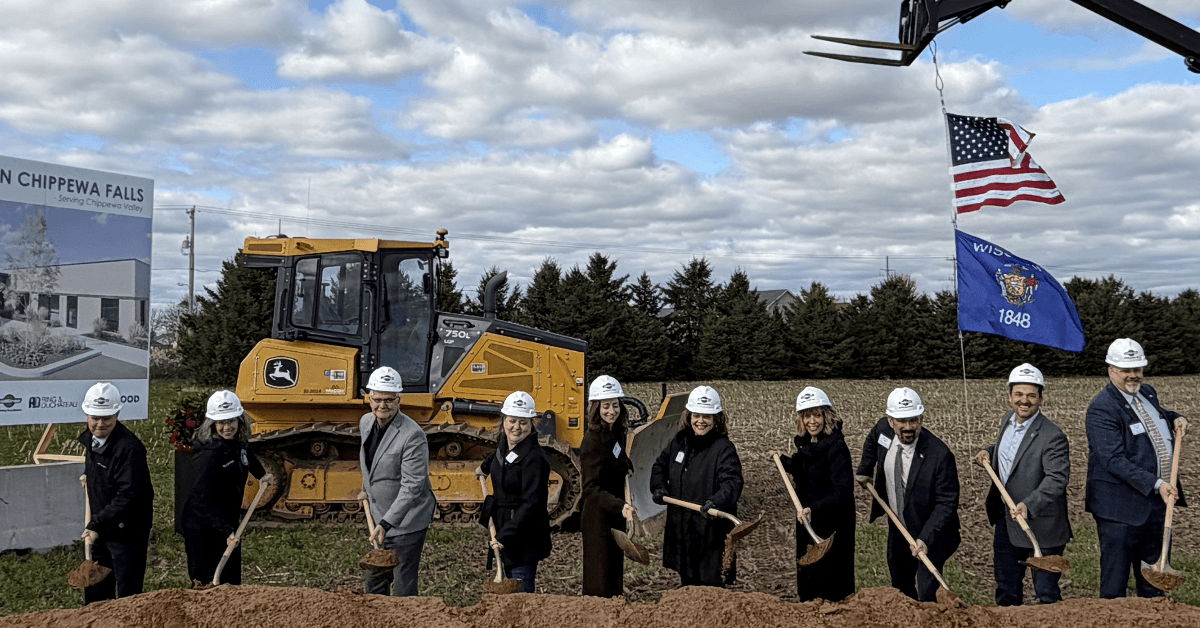
CEDC was proud to celebrate the groundbreaking of the new Rogers Behavioral Health hospital in Chippewa Falls—a project that represents a major accomplishment for our organization, our partners, and the entire Chippewa Valley. The groundbreaking event was more than just turning dirt. It was in part about a gathering in a field to witness a shared belief that strong communities don’t happen by accident — they believe in economic development and are built on purpose.
One of the things we talk about a lot in economic development is speed to market. Communities that move quickly — and thoughtfully — are the ones that win. This project is a great example of that. From vision to action, Rogers Behavioral Health, the city, the County, the State (From the Senate, Governor, and agencies)- all working together to move this forward in a way that serves our citizens sooner rather than later. That matters, especially in the mental health arena. That speed—and the collaboration behind it—now stands as a model for how the Chippewa Valley.
But speed alone isn’t enough. What makes the groundbreaking so special-it’s how the was done. This project reflected a “give‑first” mindset — partners stepping up, aligning around a shared goal, and focusing on long‑term impact instead of taking short‑term credit. That spirit is at the heart of CEDC’s philosophy.
Mental health care is often talked about as a service — but it’s also infrastructure. Just like broadband, water, sewer, power, mental health support is foundational to any thriving community. CEDC knows that you can’t grow a strong economy without healthy people. And you can’t support employers, families, or schools without meaningful access to behavioral health care. Hence, more than a single facility, the Rogers Behavior Health campus is a long-term investment in mental health infrastructure that will support economic growth and community resilience for decades to come.
CEDC played a central role in aligning community needs, county resources, and private investment to assist in bringing the Rogers Behavioral Health project to the site where the groundbreaking occurred. Through our advocacy efforts CEDC helped secure critical funding and move the project from concept to implementation. Combined with strong local support, this effort resulted in roughly $16 million in total investment in Chippewa Falls. CEDC served as a convener and connector, bringing together local leaders, state partners, and Rogers Behavioral Health around a shared goal. CEDC’s helped coordinate streamline approvals, align resources, and helped build strong community support for the project. As a result of these efforts, the project avoided many bottlenecks that can slow complex developments, creating a clear example of how collaboration can accelerate high impact investments in Chippewa.
When we talk with expanding or relocating companies, site selectors, and major employers about what they believe what matters most when they analyze a location to expand to, the conversation always comes back to one thing: people. Talent is our most important asset. Supporting the well‑being of that talent — and of every resident — is one of the smartest investment targets we can have for our community.
That’s why this project matters far beyond that shovel turned celebrated field. The total economic development return on investment here won’t just be measured this year, next year, or even five years from now. It will be super realized over “twenty years and one day from that groundbreaking event”— in stronger families, a healthier workforce, reduced strain on emergency systems, and a healthier over all community that thrives better by taken care of its own.
Now Rogers Behavioral Health hospital will provide critical services including crisis stabilization, residential treatment, and outpatient care for adolescents and adults here in the Chippewa Valley like they have been going since 1907 when they were founded by Dr. Arthur Rogers and his wife in Oconomowoc Wisconsin. r
CEDC says “thank you Rogers Behavioral Health for believing in Chippewa” and Thanks you to our elected officials, our public partners, the construction trades, and all advocates who made project happen.