
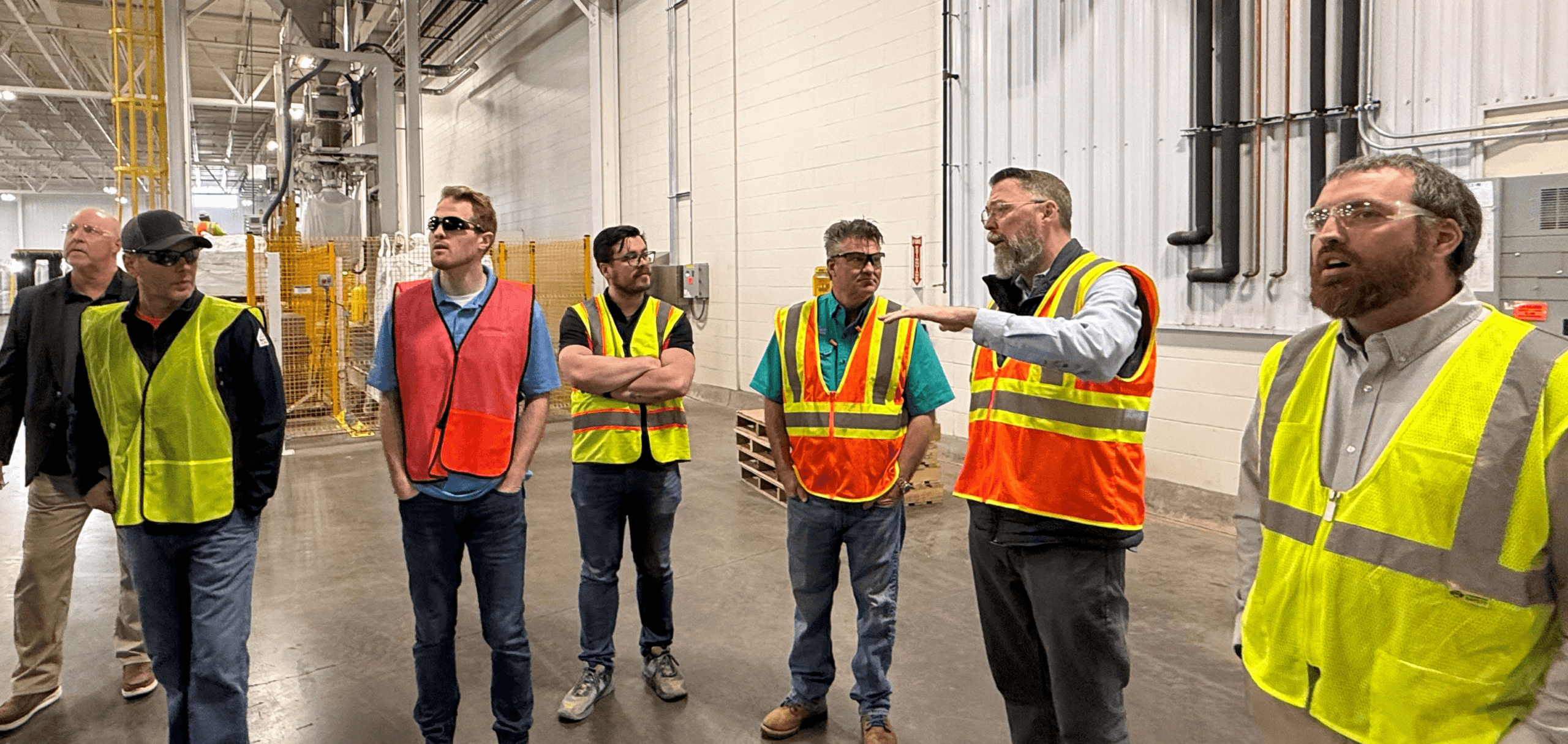
Recently, Chippewa Valley Bean welcomed regional partners for a Business Expansion and Retention (BEAR) visit and Familiarization (FAM) tour. The visit brought together Chippewa Valley economic development professionals, along with representatives from Dunn Energy Electric Cooperative and Dairyland Power Cooperative, for a firsthand look at one of the region’s quiet global leaders.
At CEDC, BEAR visits are more than routine check-ins. When our team sits down with manufacturers, distributors, and logistics providers to ask structured questions—about import volumes, tariff exposure, supply chain pressures, and global customer bases—we are building the foundation for stronger international engagement across the region.
This visit offered exactly that kind of insight. From receiving beans from local growers to cleaning, grading, and preparing them for shipment around the world, Chippewa Valley Bean demonstrated the full scope of an operation built on precision, consistency, and decades of expertise.
Nestled in the Chippewa Valley, Chippewa Valley Bean has grown from a family farm into one of the world’s leading processors and exporters of kidney beans. While the company maintains deep rural roots, its reach now extends across dozens of countries, supplying high-quality products to food companies and ingredient buyers worldwide. Their story is not just about beans—it is about rural origins, global markets, and a long-term commitment to quality, relationships, and community.
The company’s story begins in 1858, when the Doane family homesteaded in Dunn County. Over generations, the farm evolved alongside changing agricultural markets. In 1969, the family planted its first crop of dark red kidney beans, marking a pivotal shift toward specialty crops and value-added production. That decision laid the groundwork for future expansion, including entry into export markets where demand for high-quality beans continues to grow.
Despite its scale, Chippewa Valley Bean remains family-owned and operated. That continuity has helped foster long-term relationships with growers, employees, and customers alike. Today, the company is known for doing one thing exceptionally well: producing premium kidney beans. With a focus on non-GMO practices and close collaboration with its grower network, Chippewa Valley Bean delivers consistent, high-quality products that meet strict food safety standards.
While their beans are grown in Wisconsin, they are consumed around the world—in canned goods like chili and soups, in refried bean pastes, and in a wide range of international dishes. This global reach translates into real local impact. Chippewa Valley Bean supports area farmers through contracts and technical expertise, sustains jobs in processing and logistics, and brings export dollars back into the regional economy.
During the visit, participants engaged in open dialogue with company leadership on topics ranging from workforce and transportation to energy reliability and future growth plans. The FAM tour also provided valuable insight into the company’s operational needs, energy profile, and long-term vision.
These conversations matter. The majority of new jobs and capital investment in any community come from existing businesses choosing to expand. By proactively engaging with companies like Chippewa Valley Bean, we can identify challenges early, connect businesses with resources, and ensure that infrastructure—from power to transportation—keeps pace with growth. Just as importantly, these visits strengthen relationships and build trust, making it easier to work together when new opportunities arise.
At CEDC, our role goes beyond filling buildings or breaking ground. Our highest calling is to create the conditions that allow local businesses to grow, compete, and succeed. In today’s global economy—defined by complex supply chains, shifting tariffs, and intense competition for investment—international trade literacy is not a luxury; it is infrastructure.
BEAR visits are how we build it, one conversation at a time.
If you are a local business owner and have not yet hosted a BEAR visit, we encourage you to reach out and start the conversation.