
The story of 2025 for the Chippewa Economic Development Corporation (CEDC) is really the story of a community placing one puzzle piece after another—each CEDC supporter, collaborator, and partner helping to complete a clearer picture of what Chippewa can become. Every event, pitch, training, connection, and conversation added a new edge or corner, and by December, the table was covered in signs of progress that only came into focus because so many hands chose to build together.
Communities at the core
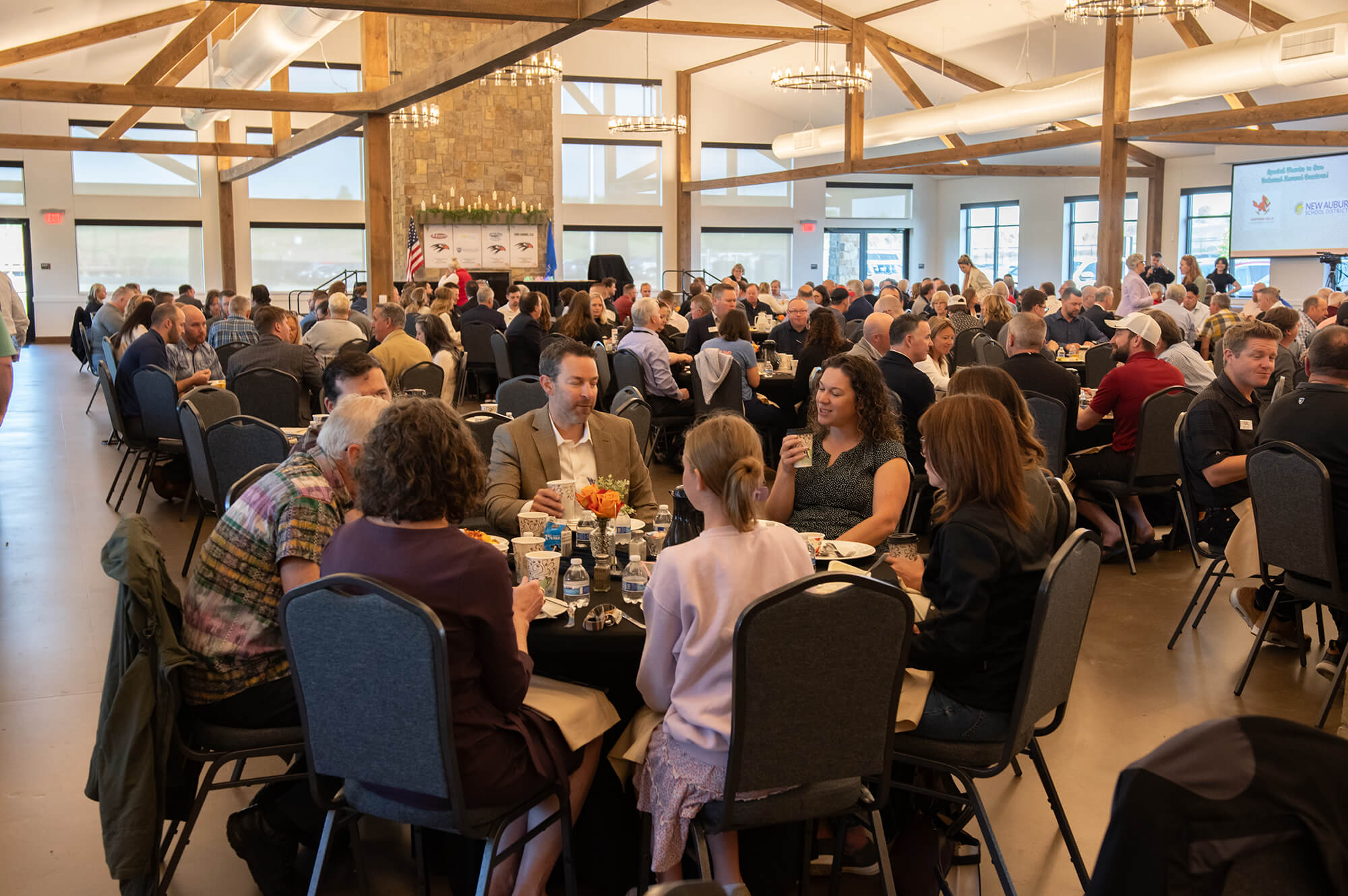
In May, more than 450 leaders gathered for CEDC’s 30th Annual Meeting under the theme “Communities at the Core,” filling the Eau Claire Event District with a sense of shared purpose that set the tone for the entire year. National workforce leader Sylvie Nelson challenged local employers to go “above and beyond” and “turn it up higher” in their community involvement. High school youth apprentices were recognized as they signed employment agreements with local businesses, illustrating how community, education, and industry fit neatly together in the region’s long-term workforce puzzle. Awards honoring entrepreneurs, manufacturers, and civic leaders—including Pondview Lavender Farm, Rocket Construction, PMI, and Rob Mooney—showed how everyday commitment turns into generational impact. That CEDC message echoed through boardrooms, shop floors, classrooms, networking events, and council chambers long after the event ended.
The entrepreneurial view
Throughout 2025, CEDC elevated local founders through HATCH ’25, Startup Week, and Collaborative Entrepreneur Showcases, giving entrepreneurs a stage, an audience, and a pathway to the next step in their journey. These events did more than celebrate ideas—they connected startups with investors, mentors, lenders, and peers, turning a single spark into a network of support stretching across the Chippewa Valley and strengthening the statewide ecosystem. The launch of BEAR ’25 further spotlighted growth-stage companies creating jobs, innovating in manufacturing and technology, and anchoring new supply chains across the region. Each pitch, conversation, and follow-up meeting represented another piece of the regional growth picture, showing how local innovation directly connects to new capital investment and quality jobs.
Storytelling that binds
As the year unfolded, CEDC’s BEAR Discussions platform continued to bring voices from shop floors, farms, classrooms, and board tables to a wider audience, helping residents and decision-makers hear directly from the people shaping the region’s economy. Throughout 2025, the podcast explored many shapes of the entrepreneurial puzzle—connecting themes like workforce development, marketing, coaching, rural innovation, resilience after healthcare disruptions, and the realities of scaling a business in western Wisconsin. These conversations did more than inform; they stitched together threads that might otherwise remain separate—rural innovators, tribal partners, educators, manufacturers, and service providers—into a shared narrative of what it means to build a modern rural economy.
The shape of healthcare
One of the most critical—and complex—sections of the 2025 puzzle involved adjusting when HSHS St. Joseph’s Hospital in Chippewa Falls abruptly closed in early 2024. CEDC collaborated with Aspirus Health and the Chippewa Valley Health Cooperative to help restore hospital capacity and emergency services many feared were permanently lost. By convening partners, aligning messaging, and elevating employer and workforce impacts in policy discussions, CEDC helped ensure that the new hospitals and clinics investments would be more supported in the broader economic picture. In addition, CEDC worked closely with Rogers Behavioral Health to help fit a crucial piece (mental health) into the picture. Rogers’ investment and expansion in Chippewa Falls brings specialized behavioral health services into full frame, filling gaps left by earlier closures and supporting families, schools, and employers who depend on accessible, high-quality mental healthcare. We helped that piece click into place. Taken together, support for Rogers Behavioral Health, Aspirus Health, and the Chippewa Valley Health Cooperative added back some of the most foundational puzzle pieces for our community. With this section rebuilt, employers gained more certainty to invest, workers more reasons to stay, and families a clearer view of a community where economic opportunity and well-being fit together by design—not by accident.
The long game
Behind the scenes, CEDC’s team and partners worked through meetings, site tours, and policy conversations that rarely make headlines but quietly change a community’s trajectory. In 2025, CEDC supported eleven separate projects evaluating Chippewa County for expansion or new investment, providing data on sites, incentives, workforce, infrastructure, and community sentiment that help turn “maybe” into “let’s break ground.” At the same time, CEDC continued advocating for policies and investments that strengthen healthcare access, workforce housing, industrial park readiness, and infrastructure. These efforts—often done alongside local governments, school districts, postsecondary institutions, and utility partners—reinforced a simple truth: economic development is a team sport, not a solo performance.
Stepping into 2026
By year’s end, the puzzle on the table looked fuller than it did twelve months before: thriving entrepreneurs, celebrated manufacturers, engaged students, bold founders, informed policymakers, and a community willing to show up early in the morning for conversations about its shared future. Yet one piece remained purposefully missing—the one that belongs to the year ahead, to the next founder, the next expansion, the next collaborative project not yet imagined. The missing puzzle piece is 2026. It will be shaped by our investors who continue to believe in CEDC’s Mission, collaborators who carve out time to mentor and partner, and community members who attend events, share stories, and welcome new ideas. With supporters and collaborators standing alongside us, the picture of Chippewa’s future is not just coming together—it is ready for a new corner, a new edge, a new center.