
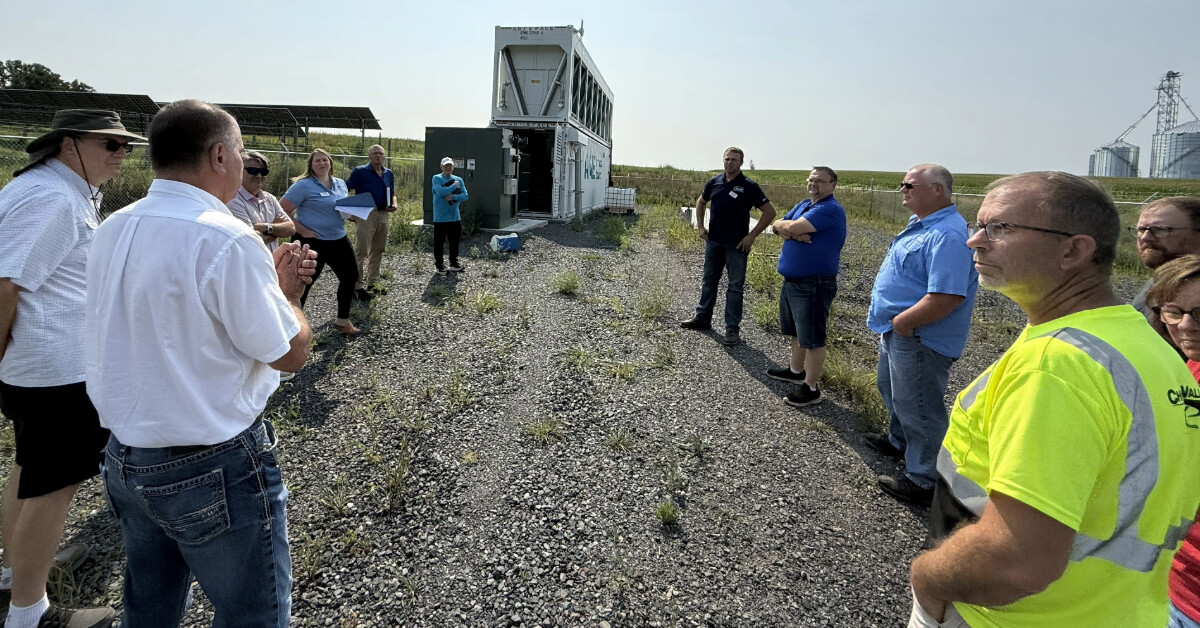
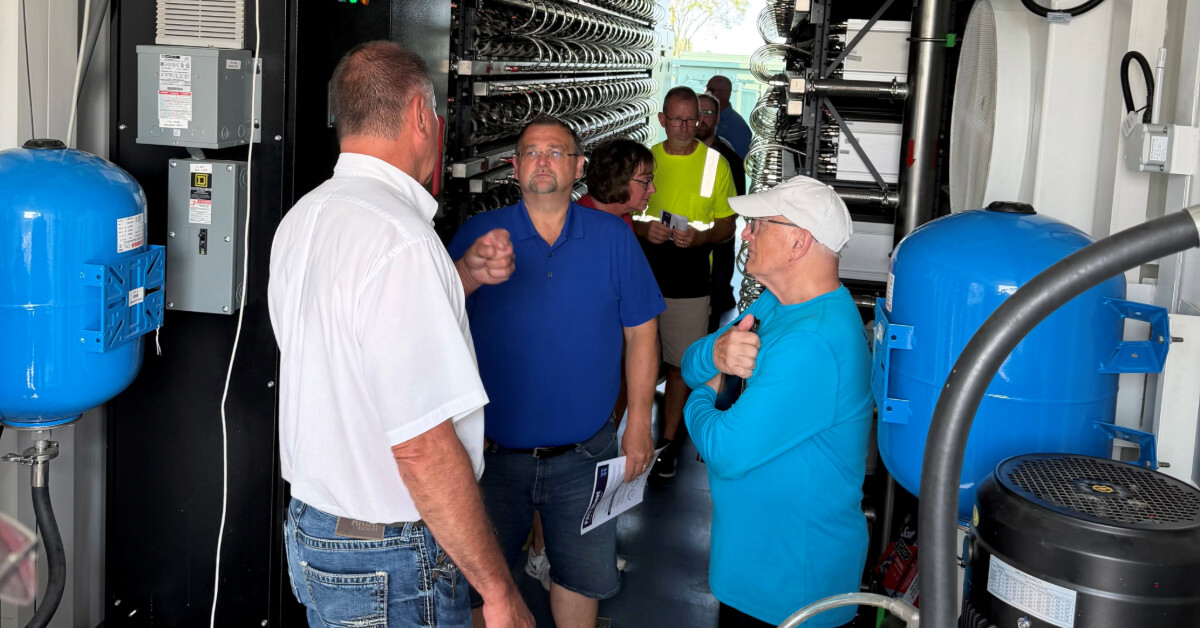
At CEDC, we value opportunities to learn directly from our economic development partners who keep our communities powered and growing. Recently, we joined Chippewa Valley Electric Cooperative (CVEC) and other economic development stakeholders for a “large load” education tour-an informative look at how cooperatives manage significant commercial and industrial energy users. This includes one of those emerging class of 2–5 MW data-center-style loads that support AI and advanced computing.
Electric cooperatives like CVEC were built to serve rural and small-community members with reliable, affordable power. Today’s landscape includes new large loads that bring both opportunity and the need for careful planning. Loads in the 2–5 MW range sit in a sweet spot for many distribution cooperatives: large enough to meaningfully improve system load factor and help spread fixed costs across more kilowatt-hours, yet manageable enough that they do not overwhelm any existing infrastructure the way some hyperscale facilities (often hundreds of megawatts) can.
These mid-sized loads—typical of edge computing, colocation, AI training/inference platforms, or specialized data facilities-contribute steady, predictable demand. That consistency helps cooperatives recover infrastructure costs more efficiently and can support rate stability for residential, our local farms, and small-business members. CVEC has been clear in its communications that any large electrical load member pays 100% of their own system upgrades, protecting existing members from cost shifts. There are currently no hyperscale data centers on CVEC’s lines.
A key feature of cooperative large-load management is curtailment capability. During periods of high regional demand-such as extreme heat or cold snaps when wholesale power prices spike and the Midcontinent Independent System Operator (MISO) issues maximum generation alerts-large commercial and industrial users are required to reduce or shed load and often switch to on-site or off-grid power. CVEC already operates peak-alert and load-control programs for commercial, industrial, irrigation, dual-fuel, water-heater, and air-conditioning loads. Residential members are asked to conserve voluntarily; large users play a structured role by curtailing when energy is needed elsewhere on the system. This “first-off, last-on” flexibility protects reliability for the broader membership and helps control purchased-power costs that ultimately influence rates.
AI learning platforms and the data infrastructure that supports them matter for more than just technology headlines. They power the tools Chippewa Valley businesses, educators, healthcare providers, manufacturers, and local governments increasingly rely on for efficiency, innovation, and competitiveness.
There is a need for Edge and mid-sized facilities to be closer to users so that it reduces latency for applications ranging from advanced manufacturing analytics to agricultural precision tools and educational resources. For a region like the Chippewa Valley—with strong technical education pathways at institutions such as Chippewa Valley Technical College, a history of computing innovation, and available land and infrastructure—these platforms represent potential economic development opportunities when structured responsibly.
The tour underscored that successful integration of large loads rests on transparent policies, cost responsibility resting with the new member, and operational flexibility such as curtailment. Cooperatives remain member-owned and member-focused; new load growth is welcomed when it strengthens the system for everyone rather than shifting risk.
CEDC thanks Chippewa Valley Electric Cooperative for opening their doors and sharing practical insights. Understanding how energy infrastructure works is essential to smart economic development. As interest in data and AI-related facilities continues, partnerships like this help ensure the Chippewa Valley is prepared to evaluate opportunities that align with community values of reliability, affordability, and shared prosperity.
We look forward to continued collaboration with CVEC and other partners as we work to grow the Chippewa Valley economy thoughtfully.