
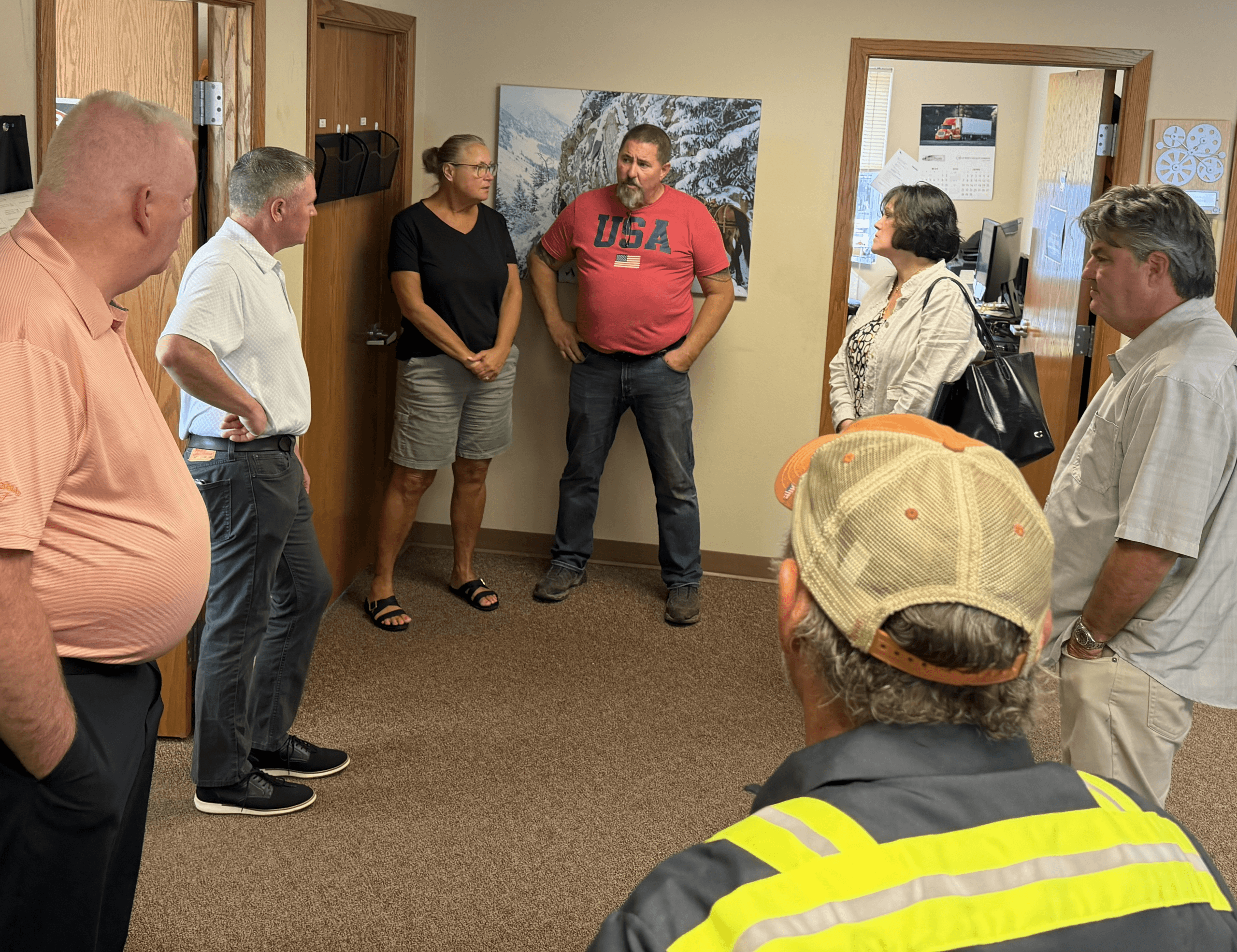
Recently, CEDC hosted Wisconsin State Representative Rob Summerfield for a Business Expansion, Attraction, and Retention (BEAR) visit at B&L Transport to discuss the company’s continued investment at the former frac sand processing facility and explore opportunities to strengthen the site’s long-term economic potential.
During the visit, B&L Transport provided an update on the significant progress made since acquiring the property. Company leadership highlighted ongoing improvements to the facility, current operations, and future plans to expand transportation, logistics, rail, and industrial capabilities at the site. The discussion underscored the importance of revitalizing formerly underutilized industrial assets while preserving family-supporting jobs and supporting continued private-sector investment in Chippewa County.
A major focus of the discussion was Wisconsin’s newly enacted rail infrastructure modernization tax credit, created by 2025 Wisconsin Assembly Bill 219 (AB 219), which was sponsored by Representative Rob Summerfield. He played a key role in advancing the bill, and it was a central issue highlighted during the last CEDC Legislative Speed Dating event in February. Short line railroads connect local manufacturers, agricultural producers, and distribution companies to the national freight rail network. By encouraging investment in rail maintenance and infrastructure improvements, the tax credit helps strengthen supply chains, reduce transportation costs, improve freight reliability, and increase the competitiveness of Wisconsin businesses. Enhanced rail infrastructure also makes industrial sites more attractive for business expansion and future investment.
The group also discussed future development opportunities for the property, including the potential establishment of a Foreign Trade Zone (FTZ). An FTZ is a federally designated area where imported goods may be stored, assembled, manufactured, or processed before entering U.S. commerce without immediately paying customs duties. Businesses operating within an FTZ can reduce or defer tariffs, improve cash flow, streamline customs procedures, and strengthen international supply chain competitiveness. For a rail-served industrial property such as the former frac sand facility, an FTZ could attract new manufacturers, distribution companies, and logistics operations while creating additional opportunities for investment and job growth.
What is CEDC doing to support business growth in Chippewa County?
CEDC supports business growth in Chippewa by partnering with existing businesses, elected officials, and economic development organizations to identify opportunities, address challenges, and advance strategic investments. Through its Business Expansion, Attraction, and Retention (BEAR) program, CEDC helps companies access resources, navigate expansion opportunities, advocate for pro-growth policies, and connect with partners that support long-term success. By fostering collaboration, supporting infrastructure improvements, and championing initiatives that strengthen Wisconsin’s business climate, CEDC continues to create a competitive environment where businesses can invest, expand, and thrive while contributing to sustainable economic growth throughout the Chippewa Valley.