
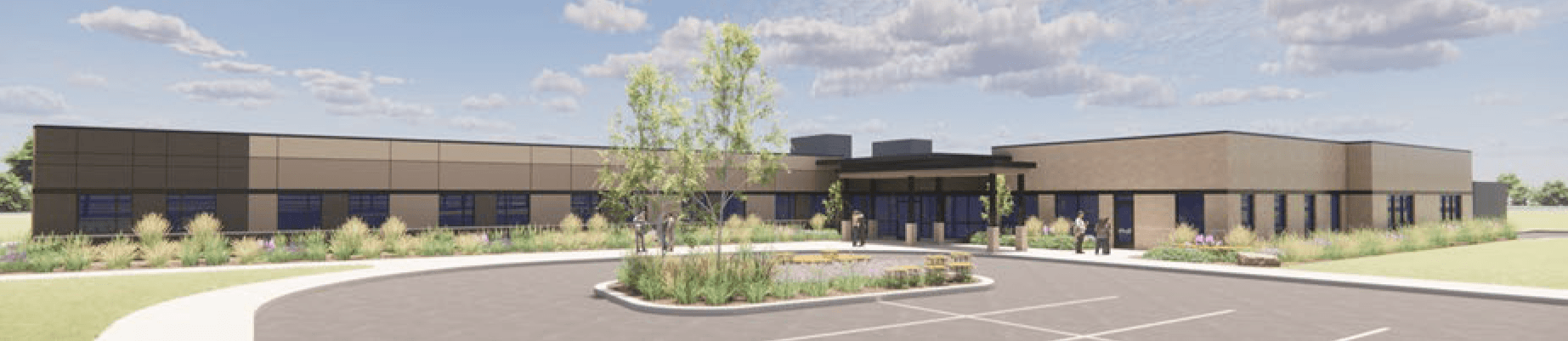
When the groundbreaking begins for the new Rogers Behavioral Health hospital in Chippewa Falls, it will represent far more than the start of construction. It marks the continuation of a legacy more than a century in the making—one now taking root in the Chippewa Valley.
A Legacy Rooted in Wisconsin
Rogers Behavioral Health traces its origins back to 1907, when Arthur Rogers and his wife Theresa opened a small health retreat in Oconomowoc. What began as a quiet, nature-based place for healing has grown into one of the nation’s leading independent behavioral health systems. Over the past 100+ years, Rogers has expanded well beyond its original campus—advancing research, developing specialized treatment programs, and delivering care for mental health, addiction, and eating disorders. Today, the organization operates across the country, serving children, teens, and adults through a full continuum of care. Despite that growth, its mission has remained constant: to provide compassionate, evidence-based treatment and help individuals find hope and healing.
Why Chippewa Falls—and Why Now
In recent years, the region has experienced a growing shortage of mental health services. Limited access to psychiatric care has left many individuals and families traveling long distances—or waiting too long—for the help they need. At the same time, local data and community input have made it clear: mental health is a top priority. The arrival of Rogers Behavioral Health is a direct response to that need. With strong collaboration between healthcare leaders, local partners, and public investment, the project quickly gained momentum. Support at both the state and local levels helped move the vision from concept to reality—demonstrating a shared commitment to strengthening access to care in the region. The decision to expand into Chippewa Valley reflects both a critical need and a strategic opportunity.
What This Means for Economic Development
From a Chippewa Economic Development Corporation perspective, this project represents more than healthcare—it is a transformative investment in the region’s future. Access to healthcare—especially mental health services—is increasingly recognized as a key factor in economic vitality. Communities that invest in care are communities positioned to grow. Major healthcare developments like this:
- Create high-quality jobs, from medical professionals to support staff
- Attract and retain talent, making the region more competitive
- Support workforce stability, ensuring residents have access to essential services
- Strengthen regional infrastructure, enhancing overall quality of life
A Community Milestone
The groundbreaking event on April 30, 2026, will bring together community leaders, partners, and residents to mark this important moment. While ceremonial in nature, it reflects something much deeper: a shared commitment to addressing mental health challenges with urgency, compassion, and long-term vision. This project is also a powerful example of what can be achieved when public and private sectors align around a common goal. Collaboration between organizations, government entities, and community stakeholders has made this development possible.
Connecting Past to Future
In many ways, Rogers Behavioral Health’s expansion into Chippewa Falls is a return to its Wisconsin roots—bringing over a century of expertise back to serve communities across the state. As construction begins, so does a new chapter for the Chippewa Valley—one where access to care is expanded, families are better supported, and the foundation for long-term community well-being is strengthened. For CEDC, this project represents exactly the kind of forward-thinking investment that drives sustainable growth. It is not only about meeting today’s needs, but about building a healthier, more resilient community for generations to come.
As the first shovels hit the ground, they signal more than progress—they signal hope.